Trinket: A Handwritten Font That Adds Whimsy Without Sacrificing Clarity
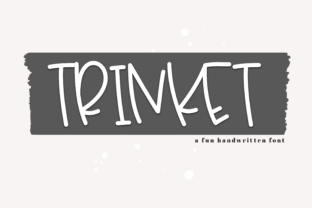
Trinket is more than a decorative typeface—it’s a deliberate design decision with functional consequences. Designed with organic stroke variation, subtle irregularities, and warm letterforms, Trinket evokes hand-drawn authenticity while maintaining strong legibility at moderate sizes. Its charm lies in restraint: it doesn’t shout; it invites. For professionals who rely on visual communication—whether launching a boutique brand, designing a workshop handout, or crafting an email campaign—Trinket offers a rare balance: personality with purpose.
Why Trinket Fits Real-World Strategy (Not Just Aesthetic Trends)
Typography shapes perception before a single word is read. When audiences scan your website, social post, or printed flyer, they’re subconsciously evaluating trust, tone, and intention. Trinket signals approachability and human-centered thinking—valuable traits for educators explaining complex topics, freelancers pitching creative services, or small business owners building community loyalty. Unlike overly playful fonts that undermine credibility, Trinket’s consistent x-height, open counters, and measured bounce keep it grounded. It works because it supports meaning—not overrides it.
This matters most when consistency across touchpoints strengthens positioning. A wellness coach using Trinket for handwritten-style quote graphics—and pairing it with a clean sans-serif for body text—creates visual hierarchy that reflects their brand values: warmth backed by structure. That alignment isn’t accidental. It’s strategic typography: choosing Trinket where emotional resonance matters most, and stepping back where clarity must dominate.
Where Trinket Delivers Measurable Value
Use Trinket where its strengths directly serve your goals:
- Brand storytelling: On “About” pages, founder bios, or mission statements—especially when emphasizing authenticity, craft, or personal connection.
- Educational materials: Workshop worksheets, learning guides, or classroom posters where reducing cognitive load through friendly visuals improves engagement.
- Customer-facing microcopy: Button labels like “Let’s Begin” or “Sketch Your Idea”, or short callouts in newsletters that benefit from tactile warmth.
- Product packaging for handmade or artisanal goods: Labels, tags, or inserts where perceived care and individuality influence purchase decisions.
- Social media visuals: Quote cards, event announcements, or behind-the-scenes snippets—provided contrast and size ensure readability on mobile.
Notice what’s absent from that list: long paragraphs, data tables, legal disclaimers, navigation menus, or accessibility-critical interfaces. Trinket isn’t built for those roles—and trying to force it there dilutes impact and risks alienating users who need speed, predictability, or screen-reader compatibility.
How to Use Trinket Intentionally (Not Decoratively)
Intentional use starts with asking three questions before applying Trinket:
- What outcome do I want this element to drive? If the goal is conversion, Trinket might work well on a CTA button—but only if paired with sufficient contrast and spacing. If the goal is quick scanning of feature benefits, it likely won’t.
- Who needs to understand this—and how quickly? A teacher preparing a handout for middle-schoolers may find Trinket reinforces engagement. A compliance officer reviewing contract terms would not.
- Does this reinforce—or contradict—my broader system? Trinket gains strength when anchored by supporting typefaces (e.g., Inter or Lato for body copy), consistent color palettes, and intentional whitespace. Used in isolation, it can feel arbitrary.
Practical planning tip: Build a mini typographic hierarchy before designing. Example:
- Headings (H1–H3): Trinket, 32–48px, letter-spacing 0.5px
- Body text: Inter Regular, 16px, line-height 1.6
- Captions & microcopy: Trinket Italic, 14px, limited to 1–2 lines
This prevents overuse. One headline in Trinket carries more weight—and feels more considered—than five scattered instances.
Risks of Using Trinket Without Context
Without clear intent, Trinket can unintentionally signal unprofessionalism, inconsistency, or lack of audience awareness. Consider these real scenarios:
- A financial advisor uses Trinket for a retirement planning checklist. The whimsy clashes with expectations of precision and security—undermining trust before the content is read.
- A SaaS startup applies Trinket across all UI elements, including form fields and error messages. Users struggle to parse instructions quickly, increasing support requests and drop-off rates.
- An educator selects Trinket for slide titles but forgets to test projection legibility. Key points vanish for attendees in the back row.
These aren’t flaws in Trinket—they’re misalignments between tool and objective. Every font has constraints. Trinket’s are well-defined: best at medium sizes, strongest in controlled environments, most effective when contrasted with neutral companions. Ignoring those boundaries turns a strategic asset into noise.
Long-Term Brand Implications
Typography choices compound over time. Trinket used thoughtfully today becomes part of your visual memory—what people recall when they think of your voice, values, or vibe. That’s powerful—if aligned with longevity goals. But ask yourself: does “whimsical yet trustworthy” reflect where you’ll be in three years? Or is it a seasonal flourish?
For creators launching personal brands, Trinket often fits naturally early on—mirroring the individuality of solo work. As teams grow or offerings scale, however, that same font may need refinement: perhaps switching to a slightly tightened version, or reserving it strictly for signature moments (like welcome emails or milestone announcements). Flexibility matters. Trinket shouldn’t lock you in; it should evolve with your clarity about who you serve and why.
Testing and Iteration: How to Know If Trinket Is Working
Don’t rely on instinct alone. Measure effectiveness through observation and feedback:
- Heatmaps: Do users pause longer on Trinket-labeled sections—or scroll past them faster?
- A/B tests: Compare conversion rates on landing pages using Trinket headlines vs. neutral alternatives. Even small lifts reveal audience resonance.
- User interviews: Ask, “What impression did this headline give you?” Not “Do you like this font?”—that invites subjective preference, not behavioral insight.
- Accessibility audits: Run contrast checks (minimum 4.5:1 against background) and verify screen reader output order remains logical when Trinket appears alongside other elements.
If testing shows confusion, hesitation, or inconsistent interpretation, revisit the *why*—not just the *how*. Maybe Trinket is right, but placement or pairing needs adjustment. Maybe another font better serves that specific context. Either way, data keeps decisions grounded.
Final Thought: Trinket as a Tool for Human-Centered Design
In a landscape saturated with algorithm-driven templates and AI-generated visuals, Trinket stands out precisely because it feels made by hand—for humans. That’s its strategic edge. But its value isn’t inherent. It emerges only when matched to purpose, audience, and environment. Use it to soften a technical explanation. Use it to add warmth to a transactional moment. Use it to signal that behind the product, service, or idea—is a person who cares about how it’s received.
That’s not whimsy. That’s intentionality. And that’s what separates memorable communication from forgettable decoration.