Boombox: A Display Font That Turns Heads—and Smiles
Imagine a font that doesn’t just say something—but grins while saying it. That’s Boombox: a display typeface bursting with personality, charm, and an unmistakably fresh energy. It’s not built for body text or spreadsheets. Boombox is the friend who shows up to your design project wearing glitter sneakers and a confetti scarf—playful, confident, and impossible to ignore.
What Makes Boombox Stand Out in a Sea of Sans-Serifs?
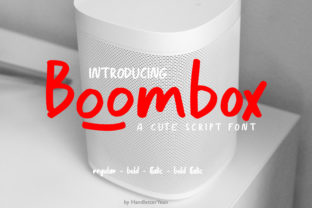
Most display fonts lean into either retro nostalgia or ultra-minimal futurism. Boombox charts its own course—whimsical but not childish, bold but not aggressive, friendly but never forgettable. Its letterforms feature soft, rounded terminals, subtle bounce in the ascenders, and generous spacing that gives every word room to breathe and sparkle.
Unlike many decorative fonts that sacrifice legibility for flair, Boombox maintains strong visual rhythm and clear character distinction—even at smaller display sizes (think 36–48px). The uppercase “B” has a gentle curve that feels like a wink; the lowercase “a” and “g” carry a cheerful, almost hand-drawn openness. These aren’t accidents—they’re intentional strokes of typographic empathy.
Where Boombox Fits Best (and Where It Doesn’t)
Boombox thrives where tone matters as much as message. It’s ideal for:
- Branding moments—logo lockups, app splash screens, or boutique packaging where warmth and approachability are non-negotiable;
- Social-first visuals—Instagram story headers, TikTok intro text, or Pinterest quote graphics that need to stop scrollers mid-swipe;
- Event identity—festival posters, workshop banners, or children’s book covers that invite curiosity rather than demand attention;
- Product microcopy—CTA buttons (“Let’s Go!”), feature highlights (“Super Fun Mode”), or playful onboarding steps in SaaS dashboards.
It’s less suited for long-form editorial work, legal disclaimers, or interfaces requiring high-density information scanning. Boombox isn’t meant to blend in—it’s designed to be the exclamation point in your visual sentence.
How Designers Are Using Boombox Right Now
Real-world usage reveals Boombox’s versatility beyond “cute.” A sustainable skincare brand recently used it for their limited-edition summer campaign—pairing Boombox headlines with clean, neutral sans-serifs for body copy. The contrast didn’t clash; it created hierarchy with heart.
In another case, an indie podcast about joyful learning adopted Boombox for episode titles and social thumbnails. Listeners began recognizing the font before even seeing the logo—proof that consistent, expressive typography builds instant brand familiarity.
Even motion designers love Boombox. Its open shapes and balanced weight translate beautifully into animated reveals—letters can “pop,” “bounce,” or “float in” without distorting or feeling forced. Try pairing it with subtle easing curves in After Effects or Figma’s smart animate, and you’ll see how naturally it moves.
Pairing Boombox Thoughtfully
A great display font shines brightest when supported—not overshadowed. Here’s what works:
- With geometric sans-serifs (like Inter, Poppins, or Montserrat) for balance: Boombox brings whimsy; the sans-serif grounds it with clarity and structure.
- With warm, low-contrast serifs (think Literata or PT Serif Caption) for editorial depth—ideal for illustrated blogs or storytelling newsletters.
- With monospaced accents (e.g., JetBrains Mono or Recursive) for tech-forward contrast—great for developer-focused tools adding lighthearted UI touches.
Avoid pairing Boombox with other highly decorative fonts, ultra-thin weights, or overly condensed typefaces. You want harmony—not a typographic tug-of-war.
Technical Notes That Matter (Especially If You’re Shipping It)
Boombox ships with full OpenType support—including standard ligatures, stylistic alternates, and multilingual Latin character coverage (accents for French, Spanish, German, Polish, and more). That means you can confidently use it across international campaigns without swapping fonts mid-sentence.
It’s available in both variable and static formats. The variable version offers smooth weight transitions (from light to bold), giving developers precise control over expressive shifts—say, a headline that subtly thickens on hover. For static use, the Bold weight delivers maximum impact without sacrificing readability.
Web performance? Light. The WOFF2 file clocks in under 40KB, and with proper subsetting (only loading the characters you need), it loads instantly—even on slower connections. No flashy font should slow down your user experience.
Why “Cute” Isn’t Just a Vibe—It’s a Strategic Choice
In today’s saturated digital landscape, users scroll past content in under two seconds. Standing out isn’t about being louder—it’s about being more human. Boombox taps into emotional resonance: joy, ease, optimism. That’s why wellness apps, creative agencies, and education platforms increasingly choose it—not despite its playfulness, but because of it.
Studies in UX psychology show that friendly, rounded typefaces increase perceived trust and reduce cognitive load. When someone sees a Boombox headline above a sign-up form, they’re more likely to pause, read, and act—not because the font is “pretty,” but because it signals safety, invitation, and intentionality.
Getting Started With Boombox: Practical Tips
If you’re evaluating Boombox for a project, here’s how to test it wisely:
- Start small: Use it for one high-impact element first—a hero headline, a CTA button, or a testimonial pull quote. See how it changes the mood of the page.
- Test across devices: Boombox’s spacing and curves hold up well on mobile, but preview it on iOS and Android—especially in Safari and Chrome—to confirm rendering consistency.
- Check contrast: While Boombox is highly legible, always verify color contrast against backgrounds using WCAG AA guidelines—especially for accessibility compliance.
- Think voice, not just visuals: Read your copy aloud in Boombox. Does the tone match? If your brand voice is dry wit or technical precision, Boombox may feel misaligned—even if it looks fun.
And remember: licensing matters. Boombox is available through reputable foundries and font marketplaces with clear web, desktop, and app licensing options. Always verify permissions before embedding in production environments.
Boombox Isn’t Just a Font—It’s a Mood Shift
You don’t adopt Boombox to follow a trend. You choose it when your project needs levity without losing authority, charm without sacrificing clarity, or delight without diluting meaning. It’s the kind of typeface that reminds us design isn’t just functional—it’s deeply, intentionally human.
Whether you’re launching a new product, refreshing a brand voice, or simply tired of sterile, default-looking headers—Boombox invites you to lead with warmth. Not as an afterthought. Not as decoration. But as deliberate, joyful strategy.
So go ahead—try it in your next mockup. Type “Hello!” in Boombox Bold. Adjust the tracking by +20. Watch how the space between letters makes the word feel like it’s leaning in, smiling, ready to connect. That’s not magic. That’s thoughtful design—and that’s Boombox.