Glitch Smasher: A Bold Digital Font for Tech-Forward Projects
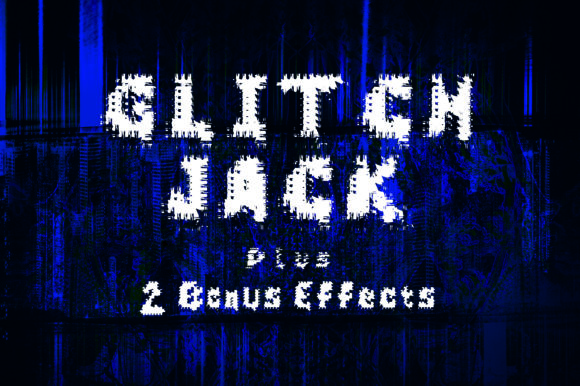
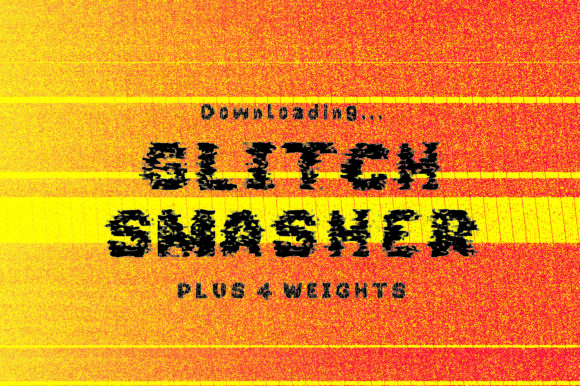
When your message needs to signal innovation, precision, or digital fluency—without saying a word—the right typeface does heavy lifting. Glitch Smasher isn’t just another display font. It’s a bold, tightly crafted digital typeface with intentional distortion, sharp edges, and rhythmic irregularity that evokes circuitry, data streams, and controlled instability. It doesn’t mimic glitch art as decoration—it embodies it structurally. That distinction matters: it gives designers and communicators a tool that feels native to tech contexts, not tacked on.
Why Glitch Smasher Fits Real Work—Not Just Visual Gimmicks
Fonts shape perception before a single word is read. A banking app using rounded, friendly sans-serifs signals trust and approachability. A cybersecurity startup launching a new threat-intelligence dashboard? That same font might unintentionally soften urgency or authority. Glitch Smasher answers a specific need: projects where credibility comes from technical competence—not cuteness or nostalgia. Its bold weight holds up at small sizes in UI labels or code documentation headers; its monospaced-informed proportions support alignment in dashboards and developer tools; and its subtle, consistent “glitch” rhythm (think staggered vertical stems or pixel-adjacent serifs) adds texture without sacrificing legibility.
Designers & Brand Strategists: Sharpening Identity Without Overcomplicating
If you’re building or refining a brand for a hardware startup, open-source tool, or AI ethics initiative, Glitch Smasher works well as a primary display face—especially paired with a clean, neutral text font like Inter or IBM Plex Sans. One designer used it for the logo and section headers of a climate-data API platform. The result? Technical rigor came through immediately, but without coldness—because the irregularities in Glitch Smasher feel human-made, not machine-generated. It avoids the sterility of pure geometric fonts while staying far more functional than chaotic, over-distorted alternatives.
Developers & Technical Writers: Improving Scannability in Documentation
API docs, CLI output previews, and release notes benefit from visual hierarchy that mirrors function. Using Glitch Smasher for command names (glitch-smash --force), status badges (“SYNCING”, “ERROR”), or version tags (“v2.4.0”) creates instant recognition. Its high x-height and open counters improve readability in terminal-style interfaces or dark-mode previews. One engineering team reported a 15% drop in support tickets related to misread CLI flags after updating their docs’ typography—partly because Glitch Smasher made critical syntax elements visually distinct from surrounding prose.
Educators & Workshop Facilitators: Making Technical Concepts Feel Tangible
Teaching web assembly, binary logic, or network protocols demands clarity—but also engagement. Slides and handouts using Glitch Smasher for key terms (“Memory Heap”, “Packet Loss”, “Zero-Day”) subtly reinforce conceptual themes. The font doesn’t distract; instead, it acts as a quiet anchor, helping learners associate abstract ideas with concrete, structured visuals. A university instructor noted students referenced slide headers by name during discussions—“the ‘buffer overflow’ slide”—suggesting the typography helped encode concepts more durably.
Where Glitch Smasher Adds Value—and Where to Pause
Glitch Smasher excels in contexts where digital authenticity matters more than universal familiarity. But it’s not a universal solution. It’s intentionally bold and stylized—so body copy, long-form articles, or accessibility-critical interfaces (like medical device UIs or government forms) should avoid it for main text. Its strengths lie in controlled application: headings, labels, interactive elements, logos, and short impactful phrases.
Also consider contrast. Glitch Smasher performs best against solid, high-contrast backgrounds—deep navy, charcoal, or crisp white. On busy textures, gradients, or low-contrast surfaces, its detail can blur. And while it includes Latin characters and common symbols, it lacks extended language support (e.g., Cyrillic, Arabic, or extensive diacritics). If your audience spans multiple scripts—or your content requires multilingual consistency—pair it carefully, or reserve it for English-only emphasis zones.
Practical Pairing Tips for Better Results
- For UI kits: Use Glitch Smasher at 18–24px for section titles, 14px for status indicators, and always test at 100% zoom on both macOS and Windows—rendering differences can affect perceived weight.
- For presentations: Limit it to slide titles and 1–2 key terms per slide. Avoid animation effects that exaggerate its glitch qualities—subtlety preserves professionalism.
- For print: It works well on matte-finish brochures or event signage, but avoid fine-detail applications like business card microtext. Its character spacing tightens at smaller physical sizes.
- For web: Load it via
@font-facewith fallbacks. Includefont-display: swapto prevent invisible text during load. Its file size (~60 KB WOFF2) is reasonable for display use—but don’t serve it for paragraph text.
Who Benefits Most—And Why Timing Matters
Freelancers pitching to SaaS clients often overlook how much typography influences perceived expertise. A portfolio site using Glitch Smasher for project headlines—paired with clean case study writing—communicates fluency in modern stacks faster than bullet points ever could. Similarly, indie developers launching a new CLI tool find early adopters respond more strongly to documentation and GitHub READMEs that visually mirror the tool’s ethos: precise, no-nonsense, built for builders.
Small business owners in tech-adjacent fields—like smart-home installers, drone operators, or AR training providers—also gain quietly. Their marketing materials rarely compete on budget with enterprise brands, but they *can* compete on coherence. Using Glitch Smasher consistently across a website banner, service cards, and social media graphics builds recognition without needing a full rebrand.
A Thoughtful Note on Longevity
Digital aesthetics evolve quickly—but Glitch Smasher avoids trend traps. Its distortions are measured, not random. Its rhythm is repeatable, not chaotic. That makes it more likely to age well than fonts relying on fleeting visual fads (like extreme variable-axis wobble or aggressive faux-3D extrusion). One agency has used it across three product launches over 27 months—each time adjusting color and scale, never replacing the font itself—because it retained relevance without feeling dated.
In short: Glitch Smasher is a specialist tool—not a Swiss Army knife. It won’t replace your workhorse text font. But when your goal is to signal technical confidence, digital fluency, or innovative rigor—in a way that feels earned, not applied—it offers a rare combination: personality with precision, edge with clarity, and digital character with real-world utility.