Metroil Font Evaluation Guide
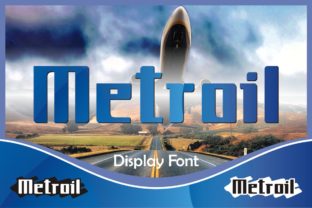
Metroil is a bold, classic display typeface designed for high visual impact. It features strong geometric structure, pronounced contrast between thick and thin strokes, and a confident, architectural presence. Unlike text fonts intended for extended reading, Metroil is optimized for short-form applications—headlines, logos, posters, and digital banners—where immediate legibility and stylistic authority matter most.
Why Consider Metroil?
Designers and brand teams often explore Metroil when they need a typeface that conveys strength, clarity, and timelessness without relying on ornamentation. Its clean lines and balanced proportions support both modern and mid-century-inspired aesthetics. Because it’s built for visibility at larger sizes, Metroil performs well in environments where attention must be captured quickly—such as outdoor signage, app splash screens, or editorial cover treatments.
People researching Metroil typically fall into one of several categories: graphic designers refining a brand identity system, marketing professionals selecting assets for a campaign rollout, UI/UX practitioners evaluating typographic hierarchy for a new interface, or educators preparing design curriculum materials. In each case, the underlying question isn’t just “What does Metroil look like?” but “Does Metroil serve my functional and expressive goals better than other options?”
Key Benefits of Metroil
- Strong visual authority: Its bold weight and sturdy letterforms command attention without requiring additional styling or effects.
- High legibility at scale: Designed with generous x-height and open counters, Metroil remains readable even when set large or viewed from a distance.
- Neutral yet distinctive tone: Metroil avoids trend-driven quirks—making it adaptable across industries from finance to fashion—while still offering personality through its structured geometry.
- Consistent spacing and rhythm: Even in all-caps settings or tight tracking scenarios, Metroil maintains even color and balanced negative space.
Tradeoffs and Practical Considerations
Metroil is not intended for body text. Its design prioritizes impact over economy of space or reading comfort at small sizes. Using it below 24pt—or for paragraphs longer than a sentence—can compromise readability and strain the reader’s eye. Likewise, its limited character set (in many versions) may omit extended Latin glyphs, diacritics, or OpenType features like stylistic alternates or small caps, which could affect multilingual projects or nuanced typographic control.
Licensing is another practical factor. Metroil is typically distributed as a commercial font, meaning usage rights vary by vendor and application context—web embedding, desktop use, app distribution, and print runs each carry distinct licensing terms. Always verify permissions before deployment, especially in client work or public-facing digital products.
Also consider how Metroil interacts with supporting typefaces. Its assertive nature pairs best with neutral, highly legible sans-serifs (e.g., Inter, Helvetica Neue, or Roboto) or restrained serifs (e.g., Merriweather or Source Serif). Avoid pairing it with other bold or decorative display fonts, which can create visual competition rather than hierarchy.
When Metroil Is a Strong Fit
Metroil excels in contexts where clarity, confidence, and brevity converge. Examples include:
- Brand logotypes or wordmarks requiring instant recognition and permanence;
- Event posters or exhibition titles needing to hold up under varied lighting and viewing distances;
- Mobile app onboarding screens or hero sections where a single headline sets the tone;
- Editorial magazine covers or section headers that anchor a layout without overwhelming imagery;
- Wayfinding systems or institutional signage where durability and legibility are non-negotiable.
In these cases, Metroil’s structural integrity and lack of visual noise help reinforce messaging without distraction. Its classicism also supports longevity—projects using Metroil are less likely to feel dated within two to five years, unlike fonts tied closely to passing stylistic trends.
When Alternatives May Be More Appropriate
If your project requires extensive text rendering—such as long-form web articles, documentation, or e-book layouts—Metroil should not be your primary choice. Instead, prioritize fonts built for readability at smaller sizes and variable weights, such as Inter, Roboto, or Source Sans 3.
For brands seeking warmth or approachability, Metroil’s formal rigidity may feel too austere. In those instances, alternatives like Manrope or Work Sans offer similar clarity with softer curves and more humanist proportions.
If multilingual support is essential—especially for Central/Eastern European, Turkish, or Vietnamese languages—verify whether the specific Metroil version you’re evaluating includes full Unicode coverage. If not, fonts like IBM Plex Sans or Red Hat Display provide broader language support while retaining strong display capabilities.
Making an Informed Decision
Evaluating Metroil shouldn’t hinge solely on aesthetics. Start by defining your core requirements: What’s the primary use case? Who is the audience? What technical constraints apply (e.g., web font loading, file size limits, platform compatibility)?
Then test Metroil in context—not just as isolated letters, but embedded in actual layouts, at real sizes, and across devices. Compare it side-by-side with two or three alternatives using identical copy, hierarchy, and spacing. Pay attention to how it affects tone, pacing, and perceived credibility.
Finally, assess scalability. Will Metroil support future needs—such as expanded language versions, responsive typography adjustments, or motion graphics integration? If flexibility is critical, confirm whether the foundry offers variable font versions or complementary families (e.g., Metroil Light or Metroil Condensed), or whether licensing allows for such extensions.
Metroil remains a thoughtful option for designers who value precision, restraint, and enduring form. It won’t solve every typographic challenge—but when matched deliberately to the right context, it delivers clarity, cohesion, and quiet authority. As with any typeface, its effectiveness depends less on inherent qualities and more on how intentionally it’s applied.