Soft Clouds: A Light, Playful Display Font
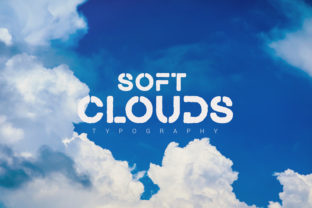
If you’ve ever spent too long scrolling through font libraries—searching for something that feels fresh but not fussy, friendly but not childish—you’ll recognize the relief of finding Soft Clouds. It’s not a workhorse text font. It’s not built for paragraphs or dense interfaces. Instead, Soft Clouds is a fun and simple display font with a light feel—designed to lift tone, signal approachability, and quietly reinforce personality in visual communication.
When Lightness Becomes an Asset
In design, weight matters—not just visually, but psychologically. Heavy, tightly spaced, or overly structured fonts can unintentionally signal formality, urgency, or rigidity. That’s useful in some contexts, but not all. When your goal is warmth, invitation, or gentle emphasis—like welcoming visitors to a wellness blog, introducing a new craft kit, or labeling a “slow living” newsletter section—Soft Clouds delivers clarity without pressure.
Its rounded terminals, airy letter spacing, and subtle irregularity mimic hand-drawn softness—without sacrificing legibility at larger sizes. Unlike many decorative fonts, it avoids exaggerated quirks that distract or age quickly. That makes it durable across seasons and platforms: a summer sale banner, a classroom poster, or an Instagram story highlight all benefit from its quiet charm.
Where Soft Clouds Fits Best (and Where It Doesn’t)
Soft Clouds shines in short-form, high-impact roles:
- Headlines and hero text — especially on landing pages, event invites, or product launch announcements where tone sets expectations before a single sentence is read;
- Branded illustrations and packaging accents — think jar labels for small-batch teas, sticker sheets for planners, or illustrated book chapter titles;
- Educational materials for younger audiences or beginner-friendly content — like workshop handouts, children’s activity cards, or mindfulness app onboarding screens;
- Social media visuals — quote graphics, seasonal greetings, or behind-the-scenes posts where authenticity and ease matter more than authority.
It’s less effective—and not intended—for body copy, legal disclaimers, data dashboards, or multilingual interfaces with complex scripts. Its lightness also means it needs thoughtful contrast: pair it with a clean, neutral sans-serif (like Inter or Lato) for supporting text, and avoid placing it over busy backgrounds or low-contrast color combinations.
Real Projects, Real Time Saved
A freelance educator used Soft Clouds to redesign her weekly email newsletter. Previously, she spent 20–30 minutes tweaking custom lettering for each header—a process that stalled consistency and delayed sends. Switching to Soft Clouds cut that step entirely. The font’s built-in rhythm and spacing meant headers looked balanced at a glance, and subscribers began commenting on how “calm” and “inviting” the layout felt—even though only the type changed.
Similarly, a small-batch candle maker applied Soft Clouds to her product tags and website banners. Before, she’d relied on generic script fonts that blurred brand distinction. With Soft Clouds, her “Lavender & Rain” scent label gained quiet character—soft enough to match the experience, distinct enough to stand out in a crowded Etsy feed. Sales didn’t spike overnight, but customer messages shifted: more questions about ingredients, fewer about shipping—suggesting the typography helped prime the right mindset.
Creativity Without Compromise
One underrated strength of Soft Clouds is how it supports creative decision-making—not by doing the work for you, but by narrowing options meaningfully. When you’re designing under time constraints (a common reality for freelancers, educators, and solopreneurs), having one reliable display font that *feels right* reduces cognitive load. You’re not weighing whether a serif looks too traditional or a geometric sans feels too cold. You’re choosing *how* to use Soft Clouds: bold for energy, regular for gentleness, all-caps for playfulness, or mixed-case for intimacy.
That flexibility extends to pairing. Because Soft Clouds doesn’t dominate a layout, it leaves room for photography, illustration, or color to carry emotional weight. A blogger documenting her zero-waste journey paired Soft Clouds headlines with muted earth tones and candid photos—creating cohesion without needing custom assets. No illustration skills? No problem. The font itself adds texture.
Who Benefits Most—and Why
Soft Clouds resonates most strongly with creators whose work centers on care, calm, craft, or connection. That includes:
- Wellness professionals — therapists, yoga instructors, nutrition coaches—who want visuals to reflect their values without cliché;
- Educators and curriculum designers — especially those working with neurodiverse learners or early literacy, where visual ease supports comprehension;
- Small business owners in lifestyle, food, or handmade spaces — where differentiation happens through feeling, not features;
- Bloggers and newsletter writers focused on reflection, creativity, or slow living—where tone is part of the content.
It’s less suited for finance, law, enterprise SaaS, or technical documentation—fields where trust is signaled through precision and restraint. In those cases, a font like IBM Plex Sans or Source Serif Pro may serve better. That’s not a limitation of Soft Clouds; it’s a sign of thoughtful design intent.
Getting Started Thoughtfully
You don’t need advanced tools to use Soft Clouds well. It works in Canva, Figma, Adobe Express, and even recent versions of Google Slides. For web use, check licensing—some versions are free for personal projects but require a license for commercial embedding. Always verify usage rights before publishing, especially if your site collects data or sells products.
Start small: replace one recurring headline style in your next project. Try it at three sizes—24px, 48px, and 72px—to see how spacing shifts. Notice where it gains presence and where it fades. Then adjust background contrast or line height accordingly. This kind of deliberate testing builds intuition faster than any tutorial.
And remember: Soft Clouds isn’t about being “cute.” It’s about choosing lightness with intention—when the message calls for breath, not boldness; when simplicity strengthens rather than simplifies; when the goal isn’t to shout, but to be softly remembered.