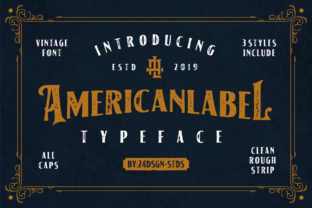
American Label: Vintage Charm, Modern Impact
When a font stops you mid-scroll—when it evokes roadside diners, hand-stamped packaging, or weathered concert posters—it’s doing more than looking good. It’s building recognition, signaling authenticity, and quietly shaping how people feel about your work. American Label is that kind of typeface: a stunning display font with genuine vintage texture, crafted for clarity and character—not nostalgia alone.
What sets American Label apart isn’t just its serif-heavy, slightly condensed structure or the subtle irregularity in stroke weight. It’s how it balances legibility at scale with unmistakable personality. The letterforms nod to mid-century American signage—think bold grocery labels, small-town theater marquees, or 1950s product tags—but without leaning into caricature. There’s no forced distress, no artificial grunge. Instead, it offers warmth, confidence, and quiet authority—ideal when you want your message to stand out *and* feel trustworthy.
Where American Label Fits Naturally
This isn’t a font for body text or dense interfaces. It thrives where attention matters most: headlines, logos, packaging, posters, social banners, and short-form branding assets. Its strength lies in intentionality—not decoration.
- Small business branding: A local bakery, craft brewery, or handmade goods shop can use American Label on storefront signage, jar labels, or Instagram highlights to reinforce authenticity and regional pride—without sounding like a theme park.
- Educational materials: Teachers and workshop leaders use it for course titles, workshop handouts, or event flyers to add visual distinction while keeping tone approachable and grounded.
- Blog and newsletter headers: Pair it with a clean sans-serif (like Inter or Open Sans) for article titles or section breaks—giving digital content a tactile, memorable anchor.
- Print-on-demand products: From tote bags to greeting cards, American Label adds instant character to designs meant to feel personal, not mass-produced.
Practical Pairing and Layout Tips
Great typography isn’t just about picking one strong font—it’s about contrast, rhythm, and hierarchy. With American Label, pairing is straightforward but intentional.
Use it for primary headlines or logo lockups, then switch to a neutral, highly readable sans-serif for supporting text. Avoid overly decorative companions—the goal is to let American Label shine, not compete. For example:
- Logo + tagline: American Label for the business name; a light-weight geometric sans for the descriptor (“Hand-Roasted Coffee Since 1987”).
- Event poster: Large American Label headline (“Summer Folk Festival”), medium-size sans-serif for date/location, and a smaller serif (or monospace) for fine print like ticket info.
- Social media banner: One line of American Label text centered over a muted photo background—no extra effects needed. Let the type do the work.
Keep spacing generous. This font benefits from breathing room—tight tracking or cramped line height dulls its impact. Try increasing letter-spacing by 20–40 units in design software, especially at larger sizes. And always test readability across devices: what reads perfectly on desktop may need slight size or weight adjustment on mobile.
Adapting for Different Audiences and Goals
How you apply American Label changes depending on who you’re speaking to—and why.
For marketers and entrepreneurs: Use it to signal heritage or craftsmanship—even if your brand is new. A startup selling artisanal hot sauce might choose American Label for its “Small Batch • Big Flavor” label because it visually communicates care and tradition, helping customers infer quality before they taste a drop.
For educators and creators: It works well in slide decks or workshop worksheets where you want key concepts to land quickly. “Core Principle,” “Your Turn,” or “Try This” in American Label creates natural visual cues—more distinctive than bold sans-serif, less distracting than script fonts.
For bloggers and freelancers: Apply it selectively—not everywhere. Your site header? Yes. Your navigation bar? No. Your email subject line preview? Possibly, if you’re sending a themed campaign (e.g., a “Retro Recipe Roundup” newsletter). Overuse dilutes impact; precision builds recognition.
Realistic Examples That Work
Consider these actual applications—no hypotheticals:
- A freelance illustrator uses American Label for her portfolio site’s hero section (“Original Art • Hand-Drawn Stories”) paired with soft watercolor textures. The font bridges analog charm and professional polish.
- A community garden co-op prints plant markers using American Label cut from vinyl—its sturdy proportions hold up beautifully at 1.5 inches tall, and the vintage tone aligns with their mission-driven, low-tech ethos.
- An indie podcast about American food history opens each episode with a short bumper featuring American Label animation—just the show title fading in over grainy film footage. It’s subtle, consistent, and reinforces genre instantly.
Maintaining Clarity and Consistency
Because American Label carries expressive weight, consistency matters. Decide upfront: Is this your *headline-only* font? Your *logo-and-banner* font? Your *limited-edition-campaign* font? Sticking to one or two clear roles prevents visual fatigue and strengthens brand recall.
Also consider accessibility. While American Label is highly legible at large sizes, avoid using it for long paragraphs, low-contrast combinations (e.g., light gray on white), or tiny UI elements. Always check color contrast ratios—tools like WebAIM’s Contrast Checker help ensure text meets WCAG standards.
And remember: originality comes from thoughtful application—not novelty alone. You don’t need to distort, layer, or animate American Label to make it yours. A clean layout, smart spacing, and honest context do more than effects ever will.
Getting Started Thoughtfully
If you’re evaluating American Label for a project, start small. Try it on one high-impact element first—a logo draft, a social post cover, or a single print piece. Print it. View it on phone and desktop. Ask yourself: Does it support the message—or distract from it?
Then ask: Does it reflect the values your audience cares about? Authenticity? Craft? Community? Simplicity? If yes, it’s likely a fit. If it feels like costume rather than voice, pause and reconsider.
American Label doesn’t promise virality or instant conversion. What it does offer is reliability—with character. It’s a tool that rewards restraint, rewards clarity, and rewards knowing exactly when—and when not—to use it. That’s the kind of typography that lasts longer than trends.