Aurond: A Futuristic Neon Display Font
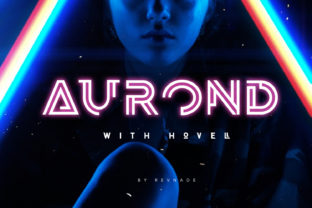
Aurond isn’t just another bold typeface—it’s a visual spark. Designed with sharp geometry, subtle tapering, and an unmistakable neon glow effect built into its character set, Aurond bridges sleek minimalism and energetic futurism. It’s not meant for body text or long paragraphs. Instead, it thrives where impact matters most: headlines, logos, posters, digital banners, app splash screens, and short-form social visuals. Its strength lies in clarity at scale, legibility under motion, and instant recognition—even in low-contrast or dark-mode environments.
Why Designers Reach for Aurond
Designers choose Aurond when they need to signal innovation without sacrificing readability. Unlike many “futuristic” fonts that lean into chaotic distortion or excessive ornamentation, Aurond stays grounded in structure. Its letterforms balance tight spacing with open counters—making it highly scannable even at smaller display sizes (like mobile app headers or thumbnail titles). The neon aesthetic isn’t simulated with layer effects; it’s baked into the font’s design language through controlled stroke contrast and intentional light-emission cues in the terminals and joints.
This makes Aurond especially useful for creators who value consistency across platforms. Whether you’re exporting a static Instagram post, animating a TikTok intro, or building a Webflow landing page header, Aurond renders cleanly—no extra plugins, no fragile CSS tricks needed.
Creative Applications Across Real Projects
Here’s where Aurond shines—not as decoration, but as functional expression:
- Brand identity systems for tech startups, gaming studios, or audiovisual collectives—especially those leaning into cyberpunk, synthwave, or ambient digital aesthetics. One small business owner used Aurond for her modular synth workshop logo, pairing it with a muted charcoal background and crisp white sans-serif subheading. Result? Instant cohesion, strong recall, and zero visual noise.
- Event promotion for virtual conferences, indie film festivals, or immersive art shows. A freelance educator launched a series of online workshops on AI ethics using Aurond for the title slide—then switched to a clean, neutral sans for body copy. The contrast elevated urgency and forward-thinking tone without alienating non-technical attendees.
- Product packaging and merch for limited-run apparel, vinyl sleeves, or hardware accessories. A hobbyist designer printed Aurond-based slogans on matte-black hoodies—using only one color (white ink)—and reported higher engagement than previous typographic treatments. Why? Because the font’s inherent “light” quality made the message feel active, not static.
Adapting Aurond for Different Audiences and Goals
How you use Aurond depends less on what it *is*, and more on what you want your audience to *feel* and *do*. Here’s how to align it thoughtfully:
- For educators and course creators: Use Aurond sparingly—only for course titles or module headers—and always pair it with high-contrast, accessible body text (e.g., Inter or IBM Plex Sans). Avoid all-caps usage unless the context is intentionally stylized (like a conference banner); sentence case preserves approachability.
- For marketers and small business owners: Test Aurond in A/B variants for email subject lines or ad headlines—but only where brand voice supports boldness. A local coffee roaster tried Aurond for their “Cold Brew Launch” campaign banner; it worked because their existing palette (deep indigo + electric teal) already echoed the font’s vibe. Context matters more than novelty.
- For developers and UI designers: Embed Aurond as a display-only web font via variable font files (if available) or lightweight WOFF2 subsets. Never load the full family for a single headline. Prioritize loading performance—especially on mobile—by preloading critical font assets and setting fallbacks that preserve hierarchy (e.g.,
font-family: "Aurond", system-ui, sans-serif;).
Keeping It Clear, Consistent, and Original
Using Aurond well means resisting the urge to over-design. Its power comes from restraint. That means:
- Avoid stacking effects: Drop shadows, glows, or animated outlines often compete with Aurond’s built-in luminosity. Let the font breathe—use solid color fills against flat backgrounds instead.
- Maintain typographic hierarchy: If Aurond handles your H1, use a single, highly legible secondary font for everything else—no more than two type families per project. This keeps attention focused and reduces cognitive load.
- Respect accessibility: Ensure sufficient contrast between Aurond text and its background (minimum 4.5:1 for normal text size). While its neon style suggests brightness, never rely solely on color to convey meaning—add icons or labels where needed.
- Stay platform-aware: On iOS, Aurond may render slightly heavier than on desktop Chrome. Preview on real devices—not just browser emulators—before finalizing layouts.
Ideas to Try This Week
You don’t need a big project to explore Aurond’s potential. Try one of these low-lift experiments:
- Create a one-slide “vision statement” for your next client pitch—using Aurond only for the core promise (“Clarity Through Code”) and a clean sans-serif for supporting bullets.
- Redesign your LinkedIn banner headline with Aurond—then test it with three colleagues. Ask: “What’s the first impression?” and “What would make you click?” Their answers reveal more about tone alignment than any trend report.
- Build a micro-style guide: define exactly when and where Aurond appears in your work (e.g., “Only for primary campaign headlines, never in email footers”), and stick to it for 30 days. Consistency compounds trust faster than stylistic variety.
Aurond works best when it serves intention—not just aesthetics. It’s a tool for signaling focus, future-readiness, or creative confidence. But like any strong tool, its value multiplies when paired with thoughtful execution: smart pairing, clear purpose, and respect for the people seeing it. Start small. Stay specific. Let the font do what it does best—stand out, stay legible, and point toward what’s next.