Greenland: Where Typographic Presence Meets Timeless Clarity
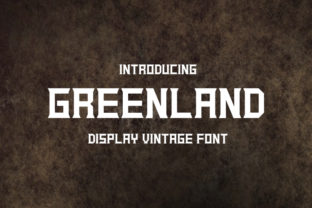
Greenland isn’t just a place—it’s a name that evokes vast ice sheets, deep fjords, and quiet, enduring strength. That same sense of grounded elegance and quiet authority lives in the Greenland typeface: a contemporary display font designed not for subtlety, but for resonance. It stands apart not through ornamentation, but through intention—its bold charm rooted in structural confidence, generous proportions, and a humanist rhythm that feels both authoritative and approachable. For designers, educators, brand strategists, and content creators alike, Greenland offers more than visual appeal; it delivers functional distinction in environments where attention is scarce and clarity is non-negotiable.
Understanding Greenland’s Design DNA
At first glance, Greenland appears deceptively simple—a robust sans serif with clean terminals and open apertures. But its uniqueness emerges upon closer inspection. Unlike many ultra-bold display fonts that rely on monoline weight or geometric rigidity, Greenland integrates subtle stroke modulation. Verticals are confidently thick, yet horizontals soften just enough to avoid visual heaviness. Letterforms like A, M, and W feature balanced negative space, while characters such as e and a retain warm, slightly rounded counters—echoing humanist traditions without sacrificing modernity.
This balance makes Greenland unusually versatile for a display face. Its x-height is generous, improving legibility at smaller sizes than expected—ideal for responsive interfaces where headline hierarchy must adapt across devices. The uppercase letters carry strong presence, but the lowercase set avoids shouting; instead, it commands with calm assurance. That duality—boldness without aggression, simplicity without sterility—is what gives Greenland its “classic and beautiful” quality. It doesn’t chase trends; it anchors them.
Real-World Applications Across Disciplines
Because Greenland communicates both substance and sophistication, its utility spans far beyond logo design or poster headlines. Consider how different professionals integrate it meaningfully:
- Brand Strategists & Marketers: Greenland excels in identity systems demanding instant recognition and long-term memorability. A sustainable apparel brand might pair Greenland headlines with a light, neutral text face—leveraging the font’s natural association with authenticity and environmental gravitas. Its clarity reinforces trust, especially in sectors where credibility is paramount: finance, healthcare, and education.
- Educators & Researchers: In academic publishing or conference materials, Greenland adds visual hierarchy without distraction. Slide titles, section headers in white papers, or chapter openers benefit from its high readability at distance—critical in lecture halls or digital presentations. One university’s climate science initiative used Greenland for exhibition banners, subtly reinforcing thematic cohesion without literal imagery.
- Content Creators & Publishers: Newsletter headers, podcast cover art, and editorial mastheads gain distinctive voice through Greenland. Its spacing allows for tight line-height control, making it effective even in constrained layouts like mobile app splash screens or social media carousels. A literary magazine recently adopted Greenland for issue titles—its warmth contrasting deliberately with stark, minimalist body copy, inviting readers before a single word is read.
- Business Owners & Product Teams: On landing pages and SaaS dashboards, Greenland serves as an effective “anchor point”—a typographic signature that signals core value propositions. Unlike overly decorative fonts that age quickly, Greenland’s restrained boldness conveys stability and forward-thinking execution. E-commerce brands report higher scroll depth when Greenland introduces key benefit statements, suggesting its visual weight helps guide cognitive focus.
Why Greenland Works Where Others Struggle
Many bold display fonts falter outside ideal conditions: they blur at low resolution, overwhelm supporting text, or feel disconnected from their context. Greenland avoids these pitfalls through deliberate design choices:
- Optimized Screen Rendering: Its letterforms avoid fine hairlines or extreme contrast, ensuring crisp rendering across Retina and standard displays—even at 24px on mobile browsers.
- Harmonious Pairing Range: Greenland pairs effectively with both neutral grotesques (like Inter or Manrope) and warmer humanist sans serifs (such as Lora or Source Sans). Its openness leaves room for texture in secondary type, preventing visual competition.
- Cultural Neutrality with Emotional Resonance: While evoking northern clarity and resilience, Greenland carries no linguistic or regional bias. It reads equally well in English, Spanish, German, Japanese (when used for Latin headings), and other global scripts—making it a pragmatic choice for international campaigns.
- Accessibility-Conscious Contrast: When set against light or dark backgrounds with appropriate sizing, Greenland meets WCAG AA contrast standards for large text. Its generous counters and uncluttered shapes support users with mild visual processing differences—especially valuable in public-facing digital tools.
Practical Implementation Tips
Using Greenland effectively isn’t about applying it everywhere—it’s about deploying it with strategic restraint. Here’s how experienced practitioners maximize its impact:
Reserve it for moments of emphasis. Greenland shines when introducing ideas—not explaining them. Use it for section headers, callout quotes, data highlights (“+42% engagement”), or institutional names. Avoid body paragraphs, captions, or navigation labels unless intentionally prioritizing tone over function.
Adjust tracking thoughtfully. Greenland’s default spacing assumes display use at larger sizes. At 36px and above, slight negative tracking (–10 to –20 units) can enhance cohesion in short phrases. Conversely, for longer headlines (e.g., “Sustainable Innovation Starts Here”), modest positive tracking (+20 to +40) improves character separation and breathes life into the line.
Test across contexts early. Because Greenland’s personality is so distinct, preview it alongside real content—not lorem ipsum. Does it feel commanding beside your brand voice? Does it complement photography or data visualizations—or compete with them? One fintech startup discovered Greenland elevated their dashboard KPI cards but clashed with complex charts; they retained it for top-level metrics only, switching to a lighter weight for sub-labels.
Consider variable axis options. Some Greenland variants include optical size or weight axes, allowing fine-tuned responsiveness. A news site might serve a slightly condensed, heavier cut for breaking-news banners and a more open, medium-weight version for feature article titles—all from one variable file. This reduces HTTP requests while preserving typographic nuance.
Common Missteps—and How to Avoid Them
Even skilled designers occasionally misapply Greenland. Awareness prevents wasted effort:
- Overuse in multi-tier hierarchies: Applying Greenland to H1, H2, and H3 dilutes its power. Reserve it for the highest level of information architecture—then use complementary, clearly differentiated fonts for subsequent layers.
- Ignoring color psychology: Greenland in pure black on white reads as definitive and serious. In charcoal or navy, it gains approachability. In muted teal or slate blue, it suggests thoughtful innovation. Avoid neon or highly saturated hues unless aligned with deliberate brand rebellion—Greenland’s strength lies in grounded confidence, not flash.
- Forgetting language support: While Greenland covers Latin, Greek, and Cyrillic scripts comprehensively, check coverage for diacritics if targeting multilingual audiences. Some extended glyphs (e.g., Vietnamese tone marks or Turkish dotted i) may require fallback testing.
- Assuming “bold” means “louder”: Greenland’s boldness is structural, not tonal. It doesn’t need animation, shadow, or outline effects to stand out. Adding those often undermines its quiet authority—like shouting a well-reasoned argument.
Looking Ahead: Greenland in Evolving Digital Landscapes
As interfaces grow more ambient—appearing on wearables, AR overlays, and voice-assisted displays—the demand for instantly legible, emotionally coherent typography intensifies. Greenland’s design principles align closely with this shift: clarity at a glance, semantic weight without clutter, and cross-platform consistency. Design systems increasingly treat display fonts not as decorative afterthoughts, but as foundational voice elements—akin to tone of voice guidelines. In that framework, Greenland functions less like a typeface and more like a typographic stake in the ground: a consistent signal of intent amid fragmentation.
Its longevity isn’t accidental. Like the landscape it evokes, Greenland endures not through resistance to change—but through deep-rooted structure, adaptive resilience, and quiet, unmistakable presence. Whether you’re naming a research initiative, launching a community platform, or redesigning a decades-old institution’s digital presence, choosing Greenland is choosing a typographic partner that doesn’t distract, diminish, or date. It simply says: This matters. Pay attention.