Maxtield: A Graffiti-Inspired Display Font for Modern Design Projects
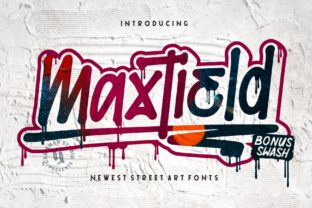
Maxtield is a bold, hand-drawn display typeface inspired by urban graffiti aesthetics. Designed with irregular strokes, uneven baselines, and expressive letterforms, it conveys energy and informality without relying on digital uniformity. It is not a text font—its design prioritizes visual impact over extended readability—and functions best in contexts where personality, immediacy, and contemporary cultural resonance matter more than neutrality or versatility.
Who Might Consider Maxtield?
Designers working on branding, packaging, posters, social media graphics, or event identities often seek fonts that communicate attitude quickly. Maxtield appeals to those aiming to evoke street culture, youth-oriented markets, creative industries, or brands embracing playful irreverence. It’s also relevant for educators and students exploring typographic expression, particularly how informal writing systems translate into digital type.
Interest in Maxtield typically arises when a project calls for strong visual distinction—not just legibility, but memorability. Users may be comparing it against other display fonts like Bangers, Chewy, or Qwigley, or weighing it alongside more restrained options such as Montserrat or League Spartan for contrast-driven layouts.
Practical Benefits of Using Maxtield
Maxtield’s primary strength lies in its distinct voice. Its graffiti roots give it an organic, human-made quality rare among digitally produced display fonts. Letters vary subtly in weight and angle, avoiding robotic repetition. This makes headlines, logos, or short slogans feel dynamic and intentional—not generic.
The font supports Latin-based languages and includes standard punctuation and numerals. Its OpenType features (where available in licensed versions) may include stylistic alternates, allowing minor variations in character shapes to enhance visual rhythm. When paired with a clean sans-serif for body text—such as Inter or Open Sans—Maxtield creates effective hierarchy and contrast.
From a production standpoint, Maxtield renders well at larger sizes across modern browsers and design applications. Its file size is modest, posing no notable performance concerns for web use when applied sparingly—e.g., in headings or hero sections.
Key Tradeoffs and Limitations
Maxtield is intentionally unsuited for body text. Its irregular spacing, inconsistent x-heights, and decorative flourishes reduce scannability beyond a few words. Attempting to set paragraphs or interface labels in Maxtield will compromise usability and accessibility, especially for readers with dyslexia or low vision.
Its stylistic specificity also limits adaptability. A brand built around Maxtield may struggle to scale into formal contexts—annual reports, legal disclaimers, or government-facing materials—without appearing incongruous. Similarly, internationalization is limited: it lacks extended Latin diacritics (e.g., ě, ñ, ø), Cyrillic, or Greek support, making it impractical for multilingual projects.
Licensing is another consideration. While some free versions exist for personal use, commercial deployment usually requires a paid license. Users must verify permitted uses—especially for merchandise, apps, or SaaS platforms—since embedding rights vary across vendors.
When Maxtield Fits Well
Maxtield performs strongly in tightly scoped, high-impact applications:
- Event branding: Festival posters, concert flyers, or pop-up shop signage benefit from its energetic presence.
- Youth-focused products: Skatewear labels, beverage cans, or app launch campaigns targeting Gen Z audiences often align with its informal tone.
- Editorial highlights: Magazine cover lines, section headers, or pull quotes where brevity and visual punch are priorities.
- Experimental UI elements: Button labels or micro-interactions in creative portfolios or art-forward websites—provided they don’t rely on Maxtield for functional clarity.
In each case, success depends on intentionality: Maxtield works best when its stylistic traits reinforce the message, not distract from it. For example, a coffee brand using Maxtield for its “Cold Brew Drop” limited edition taps into spontaneity and local authenticity; the same font would weaken a healthcare clinic’s trust-focused homepage.
When to Explore Alternatives
Consider alternatives if your project demands:
- Readability at small sizes: Fonts like Archivo Black or Rajdhani offer boldness with tighter spacing and clearer letterforms.
- Broader language support: Quicksand or Poppins provide friendly display qualities while supporting dozens of scripts and OpenType features.
- Brand longevity: Highly stylized fonts risk dating faster. A more neutral yet distinctive option like Clash Grotesk or Neue Haas Grotesk may better serve long-term identity systems.
- Accessibility compliance: WCAG guidelines emphasize consistent letter spacing and contrast. Maxtield’s variable stroke widths and tight counters can hinder screen reader parsing and visual recognition for some users.
Making a Practical Decision
Evaluating Maxtield isn’t about whether it’s “good,” but whether it serves your specific objective. Start by clarifying the role the font must play:
- What is the message? If it’s urgent, rebellious, or culturally grounded in urban creativity, Maxtield’s origins support that intent.
- Where will it appear? Confine it to large-scale, short-form placements. Avoid interfaces, forms, or any context requiring sustained reading.
- Who is the audience? Test with representative users. Does it resonate—or confuse? Does it reflect their expectations of the brand or topic?
- What constraints exist? Check licensing scope, technical requirements (e.g., variable font support), and compatibility with existing design systems.
Also consider pairing strategy early. Maxtield gains effectiveness through contrast. A mismatched companion font—too similar in weight or too ornate—will dilute its impact. Prioritize harmony in tone and function, not just visual similarity.
Finally, remember that typography communicates before it conveys meaning. Maxtield signals informality and creative confidence. If that signal aligns with your goals, it can elevate a design decisively. If your goals center on clarity, neutrality, or broad inclusivity, a less assertive option may serve more reliably—even if it’s less visually striking at first glance.